Overcoming the Challenges of Welding in Subterranean Tunnels

Installing kilometres of high-pressure stainless-steel piping inside a confined tunnel environment presents unique challenges. Conventional welding can introduce risks related to material integrity, hot-work safety and post-weld quality requirements. This case study explores how a non-welded cold-press piping solution was used for the Samruddhi Mahamarg Tunnel’s high-pressure water mist network, helping address these challenges while improving installation efficiency and reducing total installed cost.

Approximate tunnel length

8 km

Peak operating pressure

140 bar

Estimated reduction in total installed cost

25–35%

The Challenge : Welding in a Subterranean Environment

Traditional high-pressure piping installation relies on processes such as TIG or SMAW welding to create permanent joints.

In an underground tunnel, however, welding introduces challenges across three important areas:
Sensitization & Corrosion Risk

High-pressure water mist networks rely on premium austenitic stainless steel Grade 316L. Welding exposes the Heat-Affected Zone (HAZ) to temperatures between approximately 450°C and 850°C, creating the potential for chromium carbide precipitation at grain boundaries. This sensitization can reduce the corrosion resistance of the stainless steel, increasing vulnerability to pitting and stress corrosion cracking (SCC) under continuous subterranean humidity.

Severe Safety Hazards from Hot Work

TIG welding within a confined, unventilated mountain tunnel introduces significant hot-work requirements. The accumulation of shielding gases, welding fumes and volatile organic compounds can create additional hazards for technicians. Consequently, the installation requires controls including hot-work permits, local exhaust ventilation (LEV), gas monitoring and fire-watch arrangements. These requirements add additional safety infrastructure and can contribute to scheduling complexity.

Post-Weld Integrity Requirements

The high-pressure fluid network requires reliable and hydraulically efficient internal joints. Conventional welding can leave internal weld beads or slag, which may alter hydraulic flow characteristics, introduce turbulence and potentially contribute to cavitation at pressures reaching 140 bar. Welded joints also require Non-Destructive Testing (NDT) such as radiography or ultrasonic testing, followed by processes such as pickling and passivation. This multi-stage quality-assurance process adds further time to the construction cycle.

The Solution: PreFiS® Non-Welded Cold-Press Technology

To overcome the limitations associated with conventional welding, the project adopted PreFiS® high-pressure cold-press fittings. Instead of applying heat to the pipe, the fitting is positioned over the pipe ends and permanently deformed using a calibrated hydraulic press tool. This creates a metal-to-metal mechanical seal without welding.
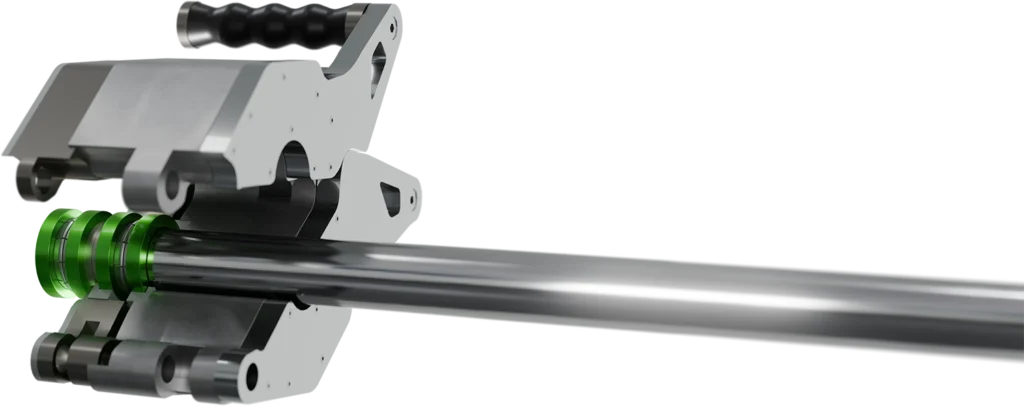
The cold-press approach provided four key advantages for the tunnel application.


Eliminating Hot Work

The cold installation process removes the need for welding and the associated hot-work requirements, reducing the need for gas monitoring, extraction infrastructure and fire-watch arrangements.

Preserving Stainless-Steel Integrity

Because the joint is formed mechanically rather than through heat, the pipe material is not exposed to the thermal effects associated with welding. The project documentation highlights this as a means of preserving the stainless steel’s corrosion resistance.

Maintaining Hydraulic Efficiency

The PreFiS® connection provides a smooth, step-free internal bore profile, supporting efficient flow through the high-pressure water mist piping network.

Faster Joint Installation

A hydraulic press tool allows a connection to be completed significantly faster than the preparation, welding and inspection cycle associated with a conventional welded joint.

The Result

The change in joining technology affected more than just the way individual pipe joints were made. By removing welding from the installation process, the project could reduce several activities and resources associated with conventional welded installation.

Faster Installation

The documented joint execution time was reduced to approximately 2–5 minutes, compared with the 45–90 minute cycle stated for conventional welding.

Reduced Hot-Work Infrastructure

The cold installation process avoids the fire hazard and associated infrastructure required for welding in the tunnel environment.

Reduced Post-Weld Processes

The need for conventional weld inspection and post-weld treatments is substantially reduced through the non-welded joining approach.

Lower Total Installed Cost

Although press-fit components have a higher initial material cost than conventional welding consumables, the project’s lifecycle analysis considered labour, NDT, hot-work infrastructure and installation time.

From Welding to Cold Pressing

Parameters

Conventional Welding

PreFiS® Cold Press

Joining method

TIG / SMAW welding

Mechanical cold pressing

Heat input

Required

None

Hot-work requirements

Required

Eliminated

Specialist welding skills

Required

Trained mechanical installation

Joint installation time

45–90 min*

2–5 min*

NDT / post-weld processes

Required

Reduced

Installation environment

More complex in confined areas

Suitable for confined installation

A Non-Welded Approach to Tunnel Fire Safety

The Samruddhi Mahamarg tunnel project illustrates an important consideration in underground piping: the joining method can have consequences far beyond the joint itself. In a confined subterranean environment, eliminating welding can simultaneously address: Hot Work , Safety Infrastructure, Installation Time , Post-Weld Processes, Total Installed Cost

PreFiS® cold-press technology provided the project with a non-welded method of joining 316L stainless-steel piping for a high-pressure water mist fire protection network, while addressing the installation constraints identified in the project analysis.

As infrastructure moves into increasingly complex underground environments, conventional installation methods can introduce constraints that extend beyond the piping itself. The Samruddhi Mahamarg application demonstrates how non-welded piping technology can be used to address the challenges of hot work, installation speed, material integrity and total project cost in a high-pressure tunnel fire protection application.

Talk to our engineering team about your piping requirements and find the right solution for your application.

Also read

Send Enquiry

Kindly provide your details and project requirements, and our team will promptly get in touch with you to address your needs. We look forward to assisting you!